
More Than a Stick
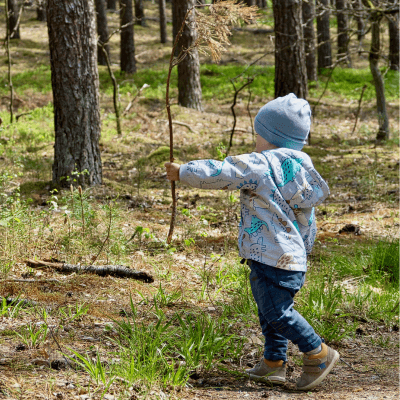 I loved watching the neighbor kids out my kitchen window. I wasn’t trying to be the creepy neighbor lady but rather was watching in a quest for knowledge about child behavior and development.
One such observation was a few days after Christmas. The four-year-old boy from across the street was having a grand old time with a gigantic stick. Soon the six-year-old neighbor girl joined in with her stick and an engaging playtime ensued. What caught my attention was that both children had mountains of recently opened Christmas gifts inside their homes. How ironic that those new, fancy toys had been flung aside at the expense of some dirty, gnarled sticks! It reminded me of youngsters who open a gift and play with the box rather than the actual present.
A friend of mine who presents to educators shared a list entitled “Top Ten Toys Children Love Most”. It included rocks, mud, dirt, boxes, and sticks. What is it about these inexpensive, everyday items that so intrigue children?
My theory is that children are drawn to sticks, boxes and the like because they are open-ended materials. There is a strong movement in early childhood about providing children with open-ended materials. The beauty of these items is that they can become anything a child wants them to become. This allows for skills like creativity, problem solving, innovation, and abstract thinking to be developed and practiced.
I also talk about open-ended materials when I present to educators. I even “quiz” them with pictures of objects, asking which ones are open-ended. One item that gets a thumbs up is a saucepan. Participants say it can be a drum, a hat, and a barrage of other ideas. What about buttons? These can become money for dramatic play, facial features for modeling dough creations, or treasures to hunt for in the sensory table.
If we challenge ourselves to assess the open-endedness of materials, we are setting up an environment rich with possibilities for young minds. I often do this assessment myself as I peruse my employer’s website looking for recommendations to outfit early childhood classrooms all over the nation. Although we do not sell boxes or mud, I easily find other options like shells, fabric, and wooden cubes, that can provide the perfect stimulus for our students’ developing brains and bodies. Keeping this in mind as we create our classrooms can make a real and positive difference for our students.
About Jennifer Fernandez:
Jennifer has over 30 years of experience in education. She has a BA in Elementary Education & Spanish and MA in Bilingual Education. She has taught PreK4-2nd grade in general & bilingual/dual language settings in Texas, Minnesota, and Mexico City. She was a professional learning specialist for PreK4SA in San Antonio, TX for seven years. Jennifer is currently the Early Childhood Subject Matter Expert at School Specialty where she supports the early childhood category. She continues to provide professional development throughout the U.S. and has presented at various local, state, and national early childhood conferences all over the country.